Blog

  • Head in the Shed: Why Doing Something With Your Hands Helps Your Head

    Head in the Shed: Why Doing Something With Your Hands Helps Your Head

    Head in the Shed: Why Doing Something With Your Hands Helps Your Head

    There is something quietly reassuring about working with physical materials.

    Wood, tools, simple tasks.

    Nothing abstract. Nothing theoretical.

    Just something in front of you that you can see, touch, and gradually shape.

    Groups like “Head in the Shed” are built around that principle.

    Not because woodworking is magical.

    But because it does something that modern life often doesn’t.

    Thinking vs Doing

    A lot of people spend a significant amount of time in their heads.

    Problem-solving. Planning. Replaying conversations. Anticipating outcomes.

    Useful, to a point.

    But when it becomes constant, it can lead to:

    • Overthinking
    • Mental fatigue
    • A sense of being stuck

    Practical activity introduces something different.

    It shifts attention outward.

    Instead of:

    “What should I do about this?”

    The focus becomes:

    “What needs doing next?”

    The Value of Simple Tasks

    You don’t need complex projects for this to work.

    In fact, simple, repeatable tasks are often better.

    • Measuring
    • Cutting
    • Assembling

    They provide:

    • Clear structure
    • Immediate feedback
    • A visible outcome

    Which gives the mind something concrete to engage with.

    Conversation Without Pressure

    Another key element is the way conversation happens in these spaces.

    It is not forced.

    People are not asked to share.
    There is no expectation of disclosure.

    Instead, conversation tends to emerge naturally:

    • Alongside the task
    • In short exchanges
    • Without intensity

    This makes it easier to engage without feeling exposed.

    Being Around Others Without “Performing”

    One of the less obvious benefits is simply being in the presence of others without needing to actively participate.

    You can:

    • Focus on the task
    • Listen to conversation
    • Speak if you want to

    There is no requirement to contribute constantly.

    Which makes it more accessible for people who might otherwise avoid group settings.

    What You Take Away

    At the end of a session, you might leave with:

    • A completed project
    • A slightly clearer head
    • A sense that you’ve done something tangible

    None of which are dramatic.

    But all of which matter.

    A Different Kind of Support

    “Head in the Shed” is not designed to be a substitute for anything clinical.

    It is not therapy.
    It is not treatment.

    It is a space where:

    • Doing something practical
    • Being around others
    • Having low-pressure conversation

    …can sit alongside each other.

    Which, for many people, is enough to make a noticeable difference.

  • “I Don’t Know What to Write” – The Most Honest Starting Point

    “I Don’t Know What to Write” – The Most Honest Starting Point

    “I Don’t Know What to Write” – The Most Honest Starting Point

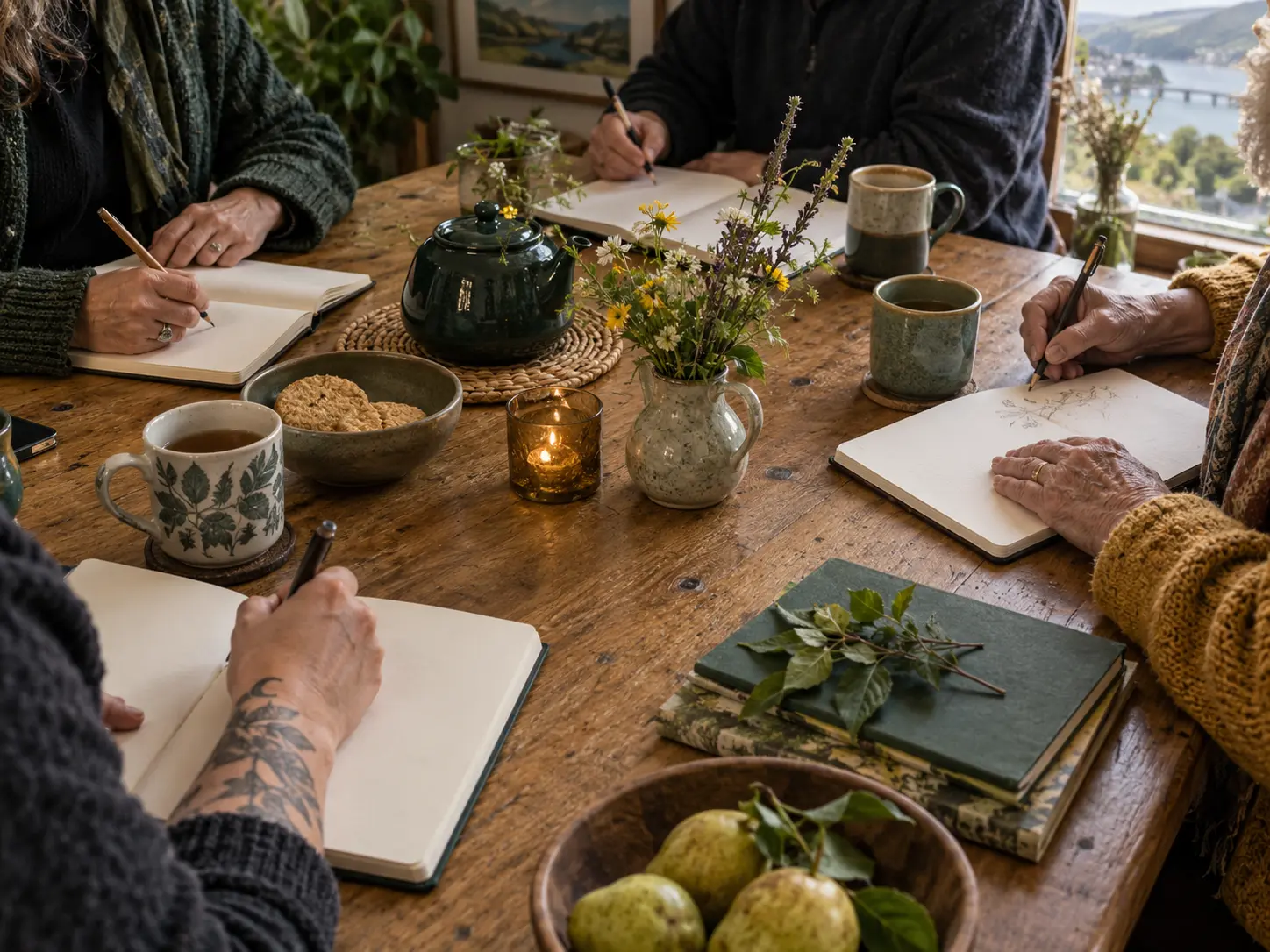
    There is a moment that happens in almost every journalling session.

    Someone sits down, looks at the page, and thinks:

    “I’ve got nothing.”

    This is usually followed by a brief internal negotiation:

    • Maybe I’ll just wait
    • Maybe something will come to me
    • Maybe I’ll just sit here and look like I’m thinking

    And occasionally:

    • Why did I agree to this?

    All of which is entirely normal.

    The Problem with “Having Something to Say”

    Most people approach writing with an unspoken rule:

    “I should have something worth writing.”

    The difficulty is that this sets the bar unnecessarily high.

    You are effectively asking your brain to produce something:

    • Coherent
    • Insightful
    • Possibly meaningful

    …before you’ve even started.

    It’s no surprise that it goes quiet.

    Writing Is Not Reporting

    Journalling is often misunderstood as a way of documenting thoughts.

    In practice, it works better when treated as a way of discovering them.

    You are not writing down what you already know.

    You are writing to find out what is there.

    That means the starting point can be as simple as:

    “I don’t know what to write.”

    Repeated, if necessary.

    It’s not elegant, but it’s effective.

    The Role of Prompts

    Prompts exist for one reason:

    To reduce the effort required to begin.

    They are not tests.
    They are not assignments.
    They are not things you have to answer “correctly.”

    They are starting points.

    If one dries up, you move on.
    If it doesn’t resonate, you ignore it.

    The aim is momentum, not perfection.

    Why Quiet Matters

    One of the most important aspects of structured journalling sessions is something that often goes unnoticed:

    Silence.

    Not awkward silence. Not enforced silence.

    Just a shared understanding that writing time is not conversation time.

    This creates a psychological boundary:

    • You are not being observed
    • You are not expected to respond
    • You are not required to explain yourself

    Which allows thoughts to surface without interruption.

    What Actually Happens Over Time

    People rarely notice dramatic changes after a single session.

    What tends to happen instead is more gradual:

    • Writing becomes easier to start
    • Thoughts become slightly clearer
    • Patterns begin to emerge

    Nothing theatrical.

    But enough to make the process worth continuing.

    A More Realistic Expectation

    If you come to a journalling session expecting transformation, you may be disappointed.

    If you come expecting:

    • A bit of space
    • A bit of clarity
    • A chance to sit with your own thoughts without interruption

    Then you are far more likely to find it useful.

    And if all you manage to write is:

    “I don’t know what to write”

    You’ve already started.

  • Why Sitting in a Room with Other People Still Matters (Even If You’d Rather Not)

    Why Sitting in a Room with Other People Still Matters (Even If You’d Rather Not)

    Why Sitting in a Room with Other People Still Matters (Even If You’d Rather Not)

    There is a particular kind of modern contradiction that most people don’t talk about.

    We are, technically, more connected than ever. Messages arrive instantly. Information is constant. You can have a conversation with someone on the other side of the world while standing in your kitchen, holding a cup of tea that has already gone cold because you forgot you made it.

    And yet, many people feel increasingly cut off.

    Not dramatically. Not always in a way that would trigger concern. Just a quiet sense that something is missing.

    That sense tends to show up in small ways:

    • Conversations that stay on the surface
    • Long stretches of time without meaningful interaction
    • A reluctance to reach out, even when you know you probably should
    • A vague but persistent feeling of being slightly “out of step”

    This is where community spaces, particularly simple, low-pressure ones, still matter far more than we like to admit.

    The Difference Between Contact and Connection

    It helps to separate two things that often get confused:

    Contact is easy.
    You can message, scroll, reply, react.

    Connection is something else entirely.
    It requires presence. It involves being seen, even if only slightly. It carries a degree of unpredictability, which is exactly why people often avoid it.

    Sitting in a room with other people creates a different psychological environment.

    You cannot curate yourself in quite the same way.
    You cannot disappear mid-sentence.
    You cannot edit your responses after the fact.

    And strangely, that is what makes it useful.

    Why “Low Stakes” Spaces Work

    There is a tendency to assume that anything helpful must be intense.

    Deep conversations. Big breakthroughs. Emotional revelations.

    In reality, most people benefit more from something far simpler:

    • A space where they can turn up without pressure
    • A structure that gives just enough direction
    • The option to speak, or not speak, without being judged for either

    Groups like journalling sessions or practical workshop environments work precisely because they are not demanding.

    You are not required to perform insight.
    You are not required to share anything you don’t want to.
    You are not required to be anything other than present.

    That, in itself, is often enough.

    The Myth of “I’ll Sort It Myself”

    Many people, particularly those who are used to managing things independently, fall into a familiar pattern:

    “I’ll deal with it.”
    “I don’t need to talk about it.”
    “It’s not that bad.”

    Sometimes that’s true.

    But sometimes it simply means that support is delayed until things become more difficult than they needed to be.

    Community spaces offer something different.

    They are not therapy.
    They are not crisis intervention.
    They are not designed to “fix” anything.

    They simply provide:

    • Regular contact
    • Shared activity
    • A degree of human presence

    Which, it turns out, goes a long way.

    What This Means in Practice

    At Cat & Crow, the aim is not to create perfect experiences.

    It is to create accessible ones.

    Spaces where:

    • You can turn up without needing a backstory
    • You can take part at your own pace
    • You can sit quietly and still be part of something

    It’s not dramatic.

    But it is effective.

    And for many people, it is exactly what has been missing.

  • You Don’t Need to Be ‘Good at Talking’ to Come Along

    You Don’t Need to Be ‘Good at Talking’ to Come Along

    You Don’t Need to Be ‘Good at Talking’ to Come Along

    There’s a quiet assumption that sits underneath most community groups, whether anyone says it out loud or not.

    It goes something like this:

    “You probably need to be reasonably confident, fairly open, and at least a bit comfortable talking about yourself.”

    And if you don’t feel like that applies to you, it’s very easy to decide that these sorts of things are “not really for people like me”.

    Which is understandable.

    Also, in most cases, completely wrong.

    The Unspoken Barrier

    When people hesitate about coming to something new, it’s rarely about the activity itself.

    It’s not usually:

    • the journalling
    • the woodworking
    • the tea and biscuits

    It’s this:

    “What if I don’t know what to say?”
    “What if I feel awkward?”
    “What if everyone else seems more comfortable than I am?”

    And underneath all of that, a more blunt version:

    “What if I make a bit of a fool of myself?”

    That’s the bit people don’t tend to say out loud.

    But it’s often the deciding factor.

    A Useful Reality Check

    Here’s the part that tends to surprise people.

    Most of the people who walk into a session for the first time are thinking exactly the same thing.

    They may not show it.

    Some will sit quietly.
    Some will talk more than they normally would.
    Some will make a joke out of it.

    But internally, there’s usually some version of:

    “Let’s just see how this goes.”

    So if you’re imagining a room full of people who are completely at ease, effortlessly open, and immediately comfortable…

    That’s not what tends to happen.

    What you actually get is a group of people, each doing their own version of “giving it a go”.

    What Actually Happens

    Let’s remove a bit of the mystery.

    A typical session is not a performance.

    You’re not expected to:

    • introduce yourself in a dramatic or meaningful way
    • share anything you don’t want to share
    • “open up” on demand
    • have the right words ready at the right time

    Instead, what tends to happen is much more straightforward.

    You arrive.

    You’re welcomed in a normal, human way.

    There’s usually a bit of light conversation, or not, depending on what you prefer.

    Then the session begins.

    If it’s journalling, you’ll be given a prompt and some quiet time to write.

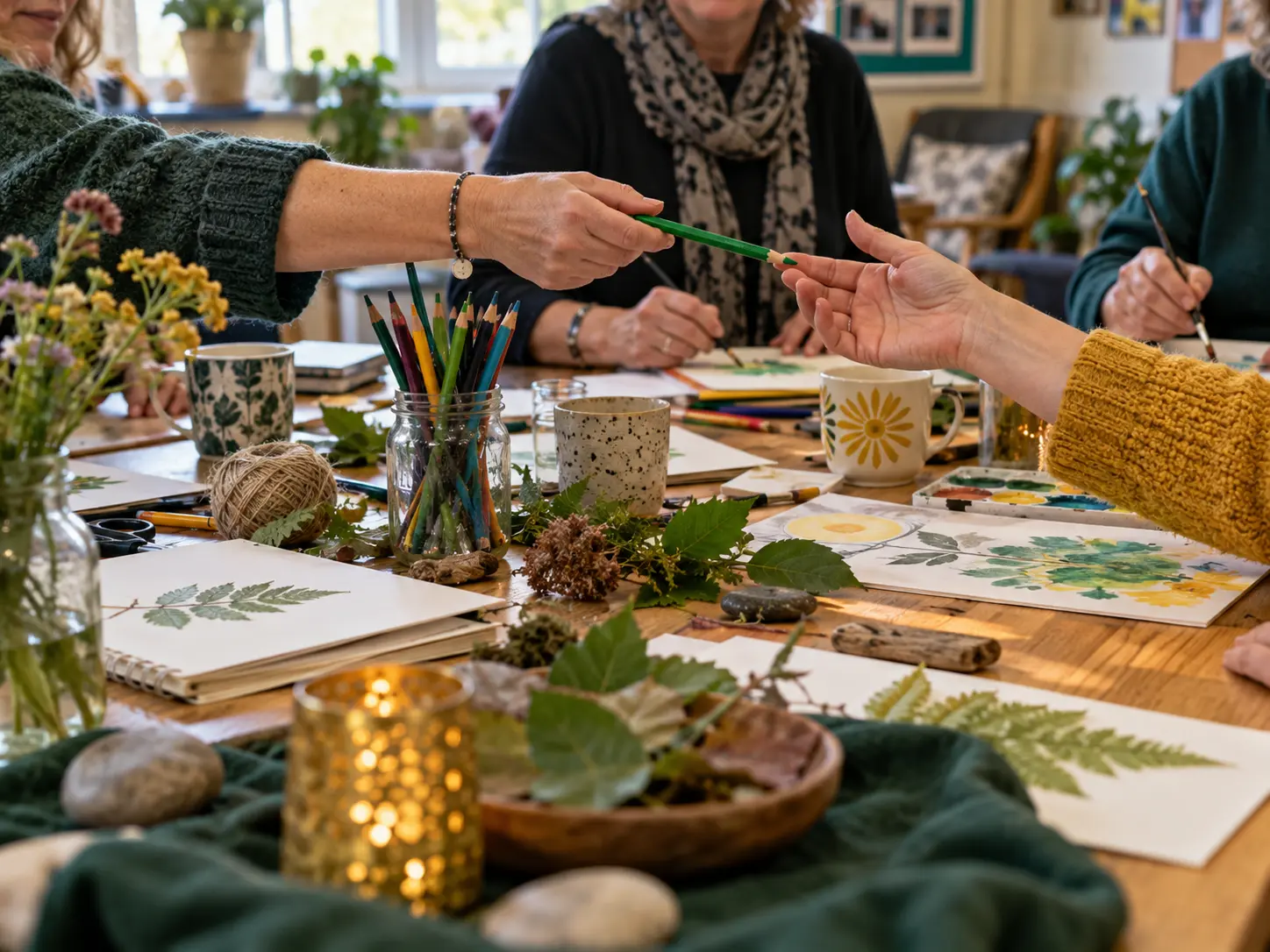
    If it’s Head in the Shed, you’ll have something practical to focus on, alongside conversation that comes and goes naturally.

    If it’s a social group, you can join in, listen, or simply sit with a cup of tea.

    There is no point at which someone turns to you and says:

    “Go on then. Tell us something meaningful about yourself.”

    That simply isn’t how it works.

    What Doesn’t Happen (This Matters)

    Sometimes it’s just as important to be clear about what won’t happen.

    You will not be:

    • put on the spot
    • expected to speak if you don’t want to
    • analysed, diagnosed, or “worked on”
    • asked to justify why you’re there

    There is no hidden agenda.

    No one is keeping score.

    No one is waiting for you to “do it properly”.

    The Role of the Group

    One of the things that often gets overlooked is how the group itself behaves.

    Over time, a kind of unspoken understanding tends to form:

    • people give each other space
    • conversations are allowed to be ordinary
    • silence is not treated as a problem
    • humour is very much welcome

    It’s not about everyone becoming deeply connected in an instant.

    It’s about creating an environment where:

    being there is enough

    That might not sound like much.

    But for a lot of people, it’s exactly what’s been missing.

    If You’re Unsure

    If you’re reading this and thinking:

    “I’m not sure I’d be any good at something like that”

    Then it’s worth gently challenging that idea.

    Because “being good at it” isn’t really a requirement.

    You don’t need to:

    • be confident
    • be articulate
    • have anything particularly insightful to say

    You just need to be willing to turn up.

    And even that can feel like a big step.

    A More Honest Way of Looking at It

    Instead of asking:

    “Will I be good at this?”

    It’s often more helpful to ask:

    “Would it do me some good to be in a different environment for a couple of hours?”

    • away from the usual routine
    • around other people, without pressure
    • doing something simple and grounded

    That’s the level we’re working at.

    Not transformation.

    Not breakthrough moments.

    Just a slightly better couple of hours than you might otherwise have had.

    Final Thought

    You don’t need to arrive as a different version of yourself.

    You don’t need to prepare anything.

    You don’t need to prove anything.

    You can arrive exactly as you are, sit down, and see how it goes.

    That’s enough.